
Dubai's 2028 Oversupply Warning Is Really a Population Question
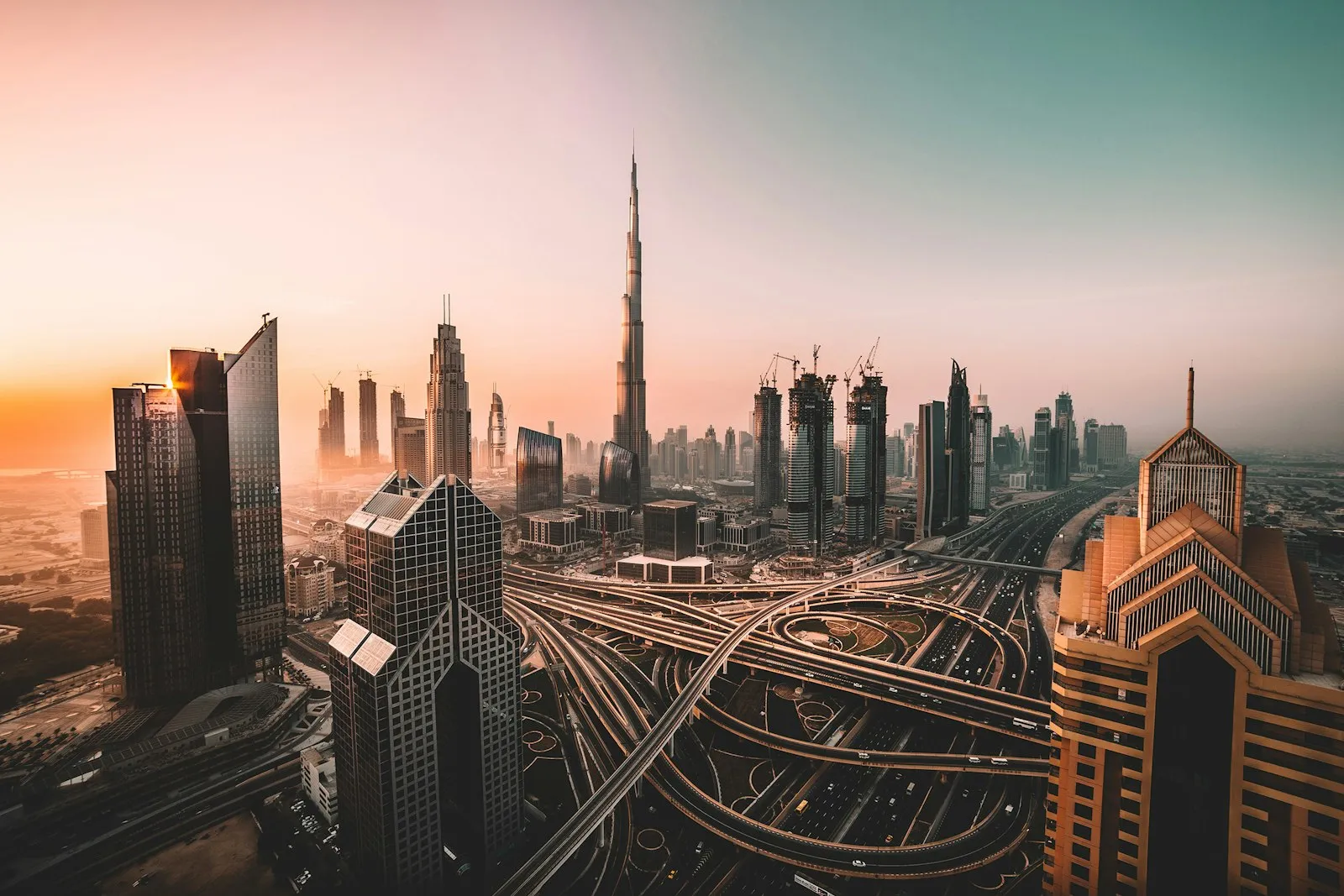
Scroll through property content this year and you keep meeting the same warning: Dubai is about to be flooded with apartments, and 2028 is the year it bites. The pipeline numbers behind it are real. Cavendish Maxwell’s latest report has 162,500 homes scheduled for 2027 and 128,200 for 2028.
But a pipeline is a list of promises. A market is those promises set against people who need somewhere to live. So I did what I do before I advise a client on a purchase: I lined the official population count up against what developers have actually been finishing, then stress-tested the result.
The demand side is a count, not a forecast
Dubai’s Data and Statistics Establishment counts residents in near real time. On 29 September 2026 it put the population at 4,807,185, up 226,885 since 1 January. That is net growth, so anyone who left is already subtracted. It works out at roughly 836 extra residents every day.
For context, 2025 added 332,000 residents, a 7.5% rise that took Dubai from 4.248 million to 4.580 million. The same body recorded 62,800 new households in 2025, taking the total to 858,000, up 7.9%.
Turning people into homes
To turn residents into homes you need a household size, and this is where a lot of online maths goes quietly wrong. Commentators often use four people per home. The official numbers point higher: 2025 added 332,000 residents but only 62,800 households, about 5.3 residents per new household. Households exclude collective housing such as worker accommodation, so treat that as a guide, not a law. I use a range of 4.3 to 5.3.
At the current pace of about 305,000 new residents a year, that is demand for roughly 57,700 to 70,900 homes in 2026.
What actually gets finished
Supply is where the pipeline headline misleads. Cavendish Maxwell tracks what was scheduled against what was delivered. In 2025, projects scheduled to deliver 82,600 homes delivered about 40,400, a completion rate of 48.9%. In the first half of 2026, 24,800 homes were completed, 41.3% of the schedule. For the second half, 47,000 are scheduled and Cavendish Maxwell expects between 14,000 and 23,500 to be completed.
A pipeline is a plan on paper until the keys are handed over. Photo via Unsplash.
Add the first-half completions to the second-half expectation and 2026 lands at roughly 38,800 to 48,300 finished homes, against demand of 57,700 to 70,900. In the best case the city ends the year about 9,400 homes short, in the worst case about 32,100. For 2025 the household count (+62,800) against completions (40,400) leaves a gap of about 22,400, though households can also form inside existing homes, so that one is indicative.
Gaps like this get absorbed somewhere: more people sharing, vacant stock filling up, rents rising. What they do not do is look like oversupply.
The 2028 stress test
Two things decide whether 2028 looks like a glut: how fast the population keeps growing, and how much of the schedule actually arrives. So I ran both. “Growth holds” means the current pace of about 305,000 new residents a year continues. “Growth halves” means it falls to about 3% a year, roughly 144,200 new residents. For delivery I use the two completion rates Cavendish Maxwell has recorded, 41.3% and 48.9%, applied to the 162,500 and 128,200 homes scheduled for 2027 and 2028.
| Scenario, 2026 to 2028 combined | Growth holds | Growth halves |
|---|---|---|
| 41.3% of schedule delivered | 29,300 homes short | 38,500 surplus |
| 48.9% of schedule delivered | 7,200 homes short | 60,600 surplus |
| 100% delivered (never recorded) | 141,300 surplus | 209,100 surplus |
Read it plainly. If growth holds, Dubai finishes the period short of homes, between about 7,200 and 29,300. If growth halves, you get a real surplus of roughly 38,500 to 60,600, somewhere between one and two years of demand at the slower pace. That is not nothing, and it would not be absorbed by holiday lets alone: second homes, short lets and empty investor stock would have to take up roughly 24% to 33% of every home delivered.
The 100% row is there to show the maximum, not a prediction. Delivery at that rate has not happened in the data above.
So the 2028 oversupply question is really a population question. Moody’s counts around 180,000 homes arriving across 2026 to 2028, an average of 60,000 a year against a 30,000 to 40,000 history, and expects modest price cooling as a result. Cavendish Maxwell’s schedule is larger. They use different pipeline definitions, but they agree on direction: more supply, slower price growth. Neither says the market breaks. It depends on whether the people keep coming.
The risk is local, not citywide
Dubai is not one market. More than 80% of scheduled 2026 completions are apartments, and the supply is concentrated: Jumeirah Village Circle, Dubai South, Dubai Science Park, Business Bay, Downtown Dubai and Dubai Healthcare City together hold nearly 37% of what is scheduled for the second half of 2026.
Family houses are the opposite story. In 2025, apartment completions rose 24% to 32,500 while villa and townhouse completions fell 6.9% to 7,900. ValuStrat’s outlook expects villas and townhouses to see price growth of 17.7% in 2026 against 7.4% for apartments, and notes they make up less than 20% of the stock. Moody’s, for its part, says modest outright price declines are probable in apartments, particularly the more affordable studios and one-bedrooms, where supply is elevated.
If you are weighing specific districts, my guides to Jumeirah Village Circle, Business Bay and Dubai South cover what is being built there, and Dubai Hills and Palm Jumeirah cover the other end of the supply spectrum.
What I would do with this
This is my read, not advice.
- Treat the pipeline as a ceiling. A scheduled number tells you what developers hope to hand over. Look at each developer’s delivery record before you rely on a handover date; my developer checklist shows how.
- Be most selective where the stock lands. Studios and one-bedrooms in the high-delivery districts are where Moody’s expects any price softness first. Compare the resale and rental stock nearby before you pay a launch premium.
- Respect scarcity, but still do the numbers. Family villas and townhouses in established communities have the strongest shortage case, and prices already reflect it. The framework for choosing a property works whichever side you are on.
- Watch three numbers. The official population count, Cavendish Maxwell’s completion rate each half, and whether population growth starts to slow. Together they tell you which scenario you are in.
If you want to see what is launching and where, the property map is updated weekly, and I am happy to talk through a shortlist.
Method and limits
- Sourced: population, households, completions, scheduled units and the completion rates come from the Dubai Data and Statistics Establishment and Cavendish Maxwell, as linked below. Moody’s figures come from the coverage cited.
- Derived by me: the daily and annual growth pace, residents per new household, the demand range, and every scenario balance. They are arithmetic on the sourced numbers, with my assumptions stated above.
- Not used: sales transactions as a measure of demand. Dubai recorded about 79,300 sales in the first half of 2026, but most are off-plan contracts, including investors buying homes that do not exist yet, which is not the same thing as someone needing a place to live.
- Limits: household counts exclude collective housing, completions include homes that may never house a resident, and the two pipeline sources define their schedules differently. This is a scenario model, not an official forecast, based on figures available on 3 October 2026. Real outcomes will differ.
This article is market commentary and analysis, not investment, legal or tax advice.
Four views from people who work in this market, in their own words:

“Moody's Ratings expects a modest cooling in UAE residential prices and developer sales over the next 12 to 18 months as new supply comes online.”
The National, 10 February 2026“Dubai's residential market is showing clear signs of transitioning to a new cycle following exceptional levels of activity over the last two years.”
Cavendish Maxwell H1 2026 release, via Zawya“An increase in apartment supply isn't inherently negative, it's actually essential to a balanced market.”
The National, 8 November 2025“Dubai is welcoming more people, wealth, and investors than ever before, but the housing pipeline isn't keeping up.”
Khaleej Times, 24 November 2025Frequently asked questions
Is Dubai going to have a property oversupply in 2028?
Not citywide if population growth holds. My scenario model shows Dubai between about 7,200 and 29,300 homes short across 2026 to 2028. A real surplus of about 38,500 to 60,600 homes only appears if population growth roughly halves.
How many homes are scheduled for completion in Dubai in 2027 and 2028?
Cavendish Maxwell's latest report schedules 162,500 homes for 2027 and 128,200 for 2028. Historically fewer than half of scheduled homes have been delivered: 48.9% in 2025 and 41.3% in the first half of 2026.
Where is the risk of oversupply in Dubai?
Locally, in apartments, especially studios and one-bedrooms, in districts where new stock is concentrated. Jumeirah Village Circle, Dubai South, Dubai Science Park, Business Bay, Downtown and Dubai Healthcare City hold nearly 37% of what is scheduled for the second half of 2026.
Are villas or apartments a safer buy in Dubai right now?
Villas and townhouses have the stronger shortage case: their completions fell 6.9% in 2025 while apartment completions rose 24%, and they are under 20% of the stock. Prices already reflect that, so the numbers still need to work.
How many people move to Dubai each year?
Dubai added 332,000 residents in 2025, a 7.5% rise, and 226,885 more by 29 September 2026, about 836 a day net of departures, according to the Dubai Data and Statistics Establishment.
Sources
- Gulf News: Dubai population rises by 226,885 since the start of 2026 (Dubai Data and Statistics Establishment)
- WAM: Dubai population tops 4.580 million by end of 2025, records 7.5% growth
- Cavendish Maxwell via Zawya: Dubai adds 24,800 new residential units in H1 2026
- Arabian Business: Dubai adds 24,800 new homes in biggest delivery surge for years
- Cavendish Maxwell: Dubai Residential Market Performance FY 2025
- Khaleej Times: UAE property prices to see modest decline in 12-18 months, says Moody's
- The National: UAE property market to cool after five years of 'extraordinary growth', says Moody's
- The National: Dubai's new housing supply fails to keep pace with population growth
- Khaleej Times: 470 new residents, only 150 homes a day
- ValuStrat: Dubai real estate 2026 outlook, villas versus apartments
Considering an investment in Dubai?
Send me your budget, timeframe and objective and I'll give you my view on where I'd start.