
Al Maktoum Airport and Dubai South: What the World's Biggest Airport Plan Means for Property
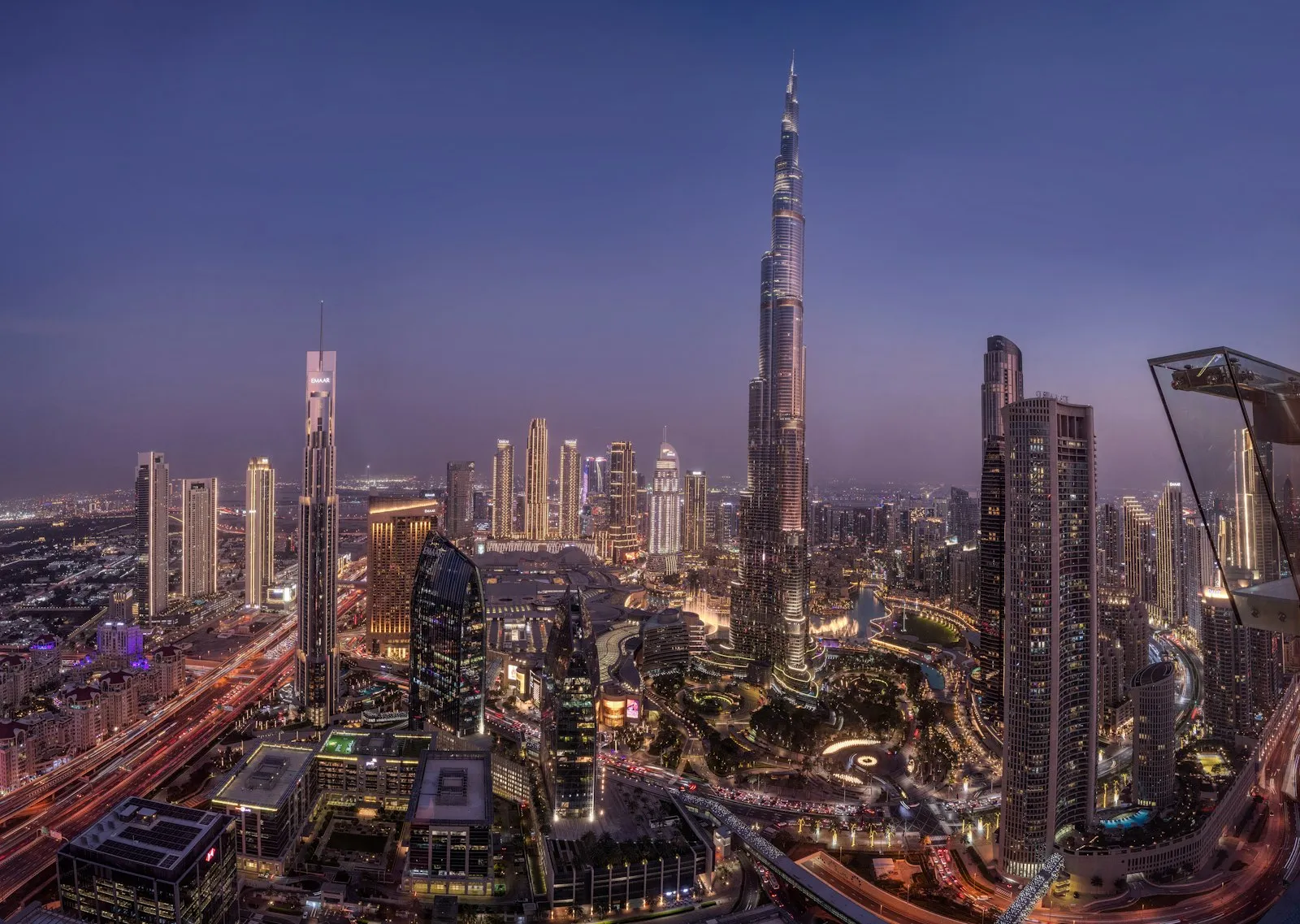
If you want to see where Dubai is heading, look south. Past Jebel Ali, past Expo City, the government is building what it says will become the largest airport in the world: the new Al Maktoum International, at the heart of Dubai South.
For property, this is the biggest single infrastructure story in the emirate. It is also the one where I most often have to slow clients down, because the timeline is long and the area is already full of new launches. Here is what has been announced, how far it has got, and how I think about buying around it.
What has been announced
In April 2024, Sheikh Mohammed bin Rashid approved the designs for the new passenger terminals. The headline numbers were:
- AED 128 billion for the project.
- Capacity for up to 260 million passengers a year when complete.
- Five parallel runways and 400 aircraft gates.
- A plan for operations at Dubai International (DXB) to move to Al Maktoum over time.
The announcement also tied the airport to housing. Demand for homes around the airport, in Dubai South, was expected to grow sharply as the airport and the logistics and aviation businesses around it expanded.
How far it has got
By mid-2026 the project was clearly moving:
- In June 2026, Dubai’s government said the first phase was proceeding in line with approved timelines, with operations due to begin in 2032.
- Reports said around AED 55 billion in contracts were due to be awarded by the end of 2026.
- Dubai Airports’ chief executive said more than 100,000 workers were on site, on what has been described as a USD 35 billion project.
Al Maktoum International already operates today, but on a much smaller scale: mostly cargo, private aviation, charter flights and some scheduled passenger services. The expansion is about turning it into the main passenger hub.
Capacity figures for the first phase vary between sources. The full build-out is the 260 million figure. Reports on the first major operating phase have given lower numbers, so do not assume the full capacity arrives in 2032.
Why an airport moves a property market
An airport is not just a runway. It brings three things that drive property demand.
Jobs. Airlines, ground handling, logistics, cargo, hotels, retail and offices. Tens of thousands of people will work in and around the airport, and many will want to live close to it.
Business. Logistics and trading companies cluster around cargo airports and ports. Dubai South sits between Al Maktoum and Jebel Ali Port, which makes it one of the most connected logistics locations in the region.
Roads and transport. An airport of this size needs roads, and probably rail, to serve it. That infrastructure makes the surrounding communities easier to live in.
I explain why jobs come before rents in my piece on Dubai’s economy and property demand.
The case for caution
Here is the part sales brochures skip.
2032 is a long way off. The first phase opens in about six years, if it stays on time. The full airport is further away still. If you buy today, you are paying now for something that arrives slowly.
There is a lot of supply. Dubai South and the wider southern corridor have seen many launches. When lots of similar homes hand over in the same area in the same years, rents and resale prices can be held back, whatever the long-term story. I wrote about this in oversupply or shortage.
Much of the story is already priced. Launch prices in the south already reflect the airport. The question is not whether the airport is good news, but whether the price you are paying leaves room for it.
Flight paths matter. Homes close to an airport can be affected by noise. Check where the runways and approach paths will be before you buy a specific unit.
How I look at Dubai South
When a client wants to buy in the south because of the airport, I run the same checks every time:
- What is your horizon? If it is under five years, the airport story will not have played out. I would rather you buy for rental yield today, with the airport as upside.
- How many similar units hand over nearby, and when? Count them. If several thousand one-bedroom flats hand over in the same community in the same year, expect pressure on rents.
- Who rents here today? Look at who actually lives in Dubai South now: airport and logistics workers, families wanting more space for the money. Your tenant is likely to be one of them.
- How does the price compare? Compare the price per square foot with ready homes nearby, from registered sales, not with the next launch.
- What is the developer’s record? In an area with many launches, delivery matters. Check past handovers and the project’s escrow registration.
My five-zone map of Dubai puts the southern corridor in context with the rest of the city.
Who Dubai South suits
Long-term buyers with patience. If you plan to hold for ten years or more, the airport is a genuine reason to look at the south.
Buyers who want space for the money. The south offers more square feet per dirham than the central areas. For families who do not need to be in the centre every day, that can be the right trade.
Investors who choose carefully. Not every building in the south will benefit equally. The well-located, well-managed buildings close to transport, schools and jobs will do better than the rest.
Businesses near the logistics cluster. For companies operating around the airport and Jebel Ali, owning a warehouse or staff accommodation nearby can make more sense than renting.
Who it does not suit
Short-term flippers. The airport will not open in time to drive a quick resale.
Buyers who need a car-free life today. Much of the south still depends on driving.
Anyone buying on the headline alone. If the only reason is “the biggest airport in the world”, step back and run the numbers.
A worked example
Here is an illustration, not a real listing.
A buyer is choosing between two one-bedroom apartments at the same budget:
- Flat A, a ready unit in an established central community with a proven rental history and a metro station nearby.
- Flat B, an off-plan unit in Dubai South, handing over in 2028, with a larger layout and a lower price per square foot.
If the buyer needs income from next year and may sell in four years, Flat A is the safer choice. If the buyer can wait for handover, accept a few years of competition from other new units, and hold into the 2030s, Flat B gives more exposure to the airport story.
Neither is right for everyone. The airport changes the long-term picture for the south. It does not change the basics of buying well.
What Dubai South is today
It helps to separate the plan from what is already there. Dubai South today has residential communities, a growing number of schools and shops, logistics parks, a free zone and the existing airport. It also borders Expo City Dubai, the former Expo 2020 site, which has been turning into a permanent district of offices, homes and venues.
Most residents today work locally, in the airport, logistics or the free zone, or they drive to the rest of Dubai. That is your current tenant pool, and it is the one that pays the rent until the bigger airport arrives.
The commercial and logistics angle
The airport story is at least as strong for commercial property as for homes. Airlines, cargo handlers, freight forwarders, e-commerce companies and their suppliers all need warehouses, offices and staff accommodation near the airport and Jebel Ali Port.
For investors who can write a bigger cheque, a warehouse let to a logistics tenant, or staff accommodation let to a company, can give longer leases and steadier income than a flat let to an individual. I cover how those deals work on my page for warehouses, labour camps and staff accommodation.
What happens to the area around DXB
People sometimes ask the opposite question: if Dubai International eventually hands its passengers to Al Maktoum, what happens to the communities near DXB, such as Al Garhoud, Deira and the areas under the flight paths in the east?
The honest answer is that no detailed plan for the DXB site has been published that I would rely on. Over the long term, the move could reduce aircraft noise in parts of the east and free up a large central site. But airport jobs would shift south over time too. If you own near DXB, it is worth following, without assuming anything yet. Any change there is a decade-long story, not a reason to sell tomorrow.
What to watch, year by year
If you own or plan to own in the south, these are the signs I would follow:
- Contract awards and construction milestones for the airport, as reported by Dubai’s government.
- Airline moves. Flydubai has been named as one of the first airlines expected to move. Firm dates for any transfer would be a strong signal.
- Transport links. Confirmed road upgrades and any rail or metro extension to the airport.
- Handover numbers in the communities near you, year by year.
- Rents on renewal in your building, from registered contracts rather than adverts.
When those move in the right direction together, the long-term case gets stronger. When the supply numbers run ahead of the rest, be patient.
Questions to ask a developer in Dubai South
- How far is this building from the planned airport and its access roads?
- Is it under a planned flight path?
- How many units in this community hand over in the same year?
- What public transport is confirmed, not just planned?
- What have your previous projects in the area rented for after handover?
If you want to look at Dubai South properly, with the supply and the numbers, I can walk you through it on the map. Book a call or answer seven quick questions to get started.
A short glossary
- DWC: the airport code for Al Maktoum International (Dubai World Central).
- DXB: the airport code for Dubai International, today’s main hub.
- Dubai South: the city district built around Al Maktoum International.
- Phase one: the first stage of the expansion, scheduled to open in 2032.
- Logistics corridor: the area linking the airport, Jebel Ali Port and the free zones.
This is general commentary, not investment advice or a forecast. Timelines and capacities are as announced and may change.
Frequently asked questions
When will the new Al Maktoum International Airport open?
The first phase is scheduled to begin operations in 2032. Dubai's government said in June 2026 that the first phase was proceeding in line with approved timelines, and Dubai Airports' chief executive has said more than 100,000 workers are on site.
How big will Al Maktoum International be?
When it was approved in April 2024, the plan was for capacity of up to 260 million passengers a year, five parallel runways and 400 aircraft gates, at a cost of AED 128 billion. Operations from Dubai International are due to move there over time.
Is Dubai South a good place to buy property?
It is one of the clearest long-term infrastructure stories in Dubai, but the airport's first phase is years away and there is a lot of new supply in the area. It suits buyers with a long horizon who check supply and buy specific, well-located stock.
What happens to Dubai International Airport?
The plan announced in 2024 is for operations to transfer from Dubai International to Al Maktoum International over time. Flydubai is expected to be among the first airlines to move.
Sources
- Dubai Media Office: Mohammed bin Rashid approves designs for the new passenger terminals at Al Maktoum International (April 2024)
- Dubai Media Office: Hamdan bin Mohammed reviews Al Maktoum Airport progress (June 2026)
- The National: Dubai's Al Maktoum airport expansion on track for 2032 launch (June 2026)
- Gulf News: Over 100,000 workers on site at Al Maktoum airport, says CEO
- WAM: Al Maktoum International Airport development project achieves milestones
Considering an investment in Dubai?
Send me your budget, timeframe and objective and I'll give you my view on where I'd start.